
Key Takeaways: To become a luxury real estate agent, choose a target luxury market, study local property values and trends, and build your expertise through specialized training like CLHMS or LHC. Then, establish credibility with local market content, partner with experienced luxury real estate agents, and develop relationships with potential clients and referral partners. Start with one neighborhood, one marketing strategy, and a 30-day action plan to build momentum toward your first luxury listing.
Becoming a luxury real estate agent is about more than selling million-dollar homes. It requires a deep understanding of the local market, strong relationships, strategic marketing, and the ability to deliver an exceptional client experience.
The luxury real estate market can be an appealing career path for agents who want to work with high-value properties and clients with specialized needs. But getting started can feel like a challenge. How do you land your first luxury listing without an established portfolio? Do you need a luxury real estate certification? And how do you build credibility in a market where reputation matters?
The good news is that you don’t need to begin with a long list of luxury sales or an established network of wealthy clients. You need a strategy for building expertise, demonstrating value, and earning trust over time.
Whether you’re a newly licensed agent or an experienced REALTOR® looking to expand into the luxury market, here’s how to break into luxury real estate and build a business that can grow with you.
What Is a Luxury Real Estate Agent?
A luxury real estate agent specializes in representing buyers and sellers of high-end residential properties. These professionals help clients navigate complex transactions involving premium homes, distinctive locations, significant financial decisions, and often highly personalized expectations.
Unlike traditional residential real estate, luxury real estate often emphasizes privacy, lifestyle marketing, detailed property knowledge, and customized service. A luxury real estate agent may coordinate private showings, develop bespoke marketing campaigns, work with international buyers, or help clients evaluate properties as part of a broader investment strategy.
However, luxury real estate isn’t defined by one universal price point. A $1 million home may be considered a luxury property in one market, while a similar home could fall into the middle of the market in another. The definition depends on local pricing, inventory, buyer expectations, and the characteristics of the property.
Types of luxury properties
Luxury real estate agents may specialize in a variety of property types, including:
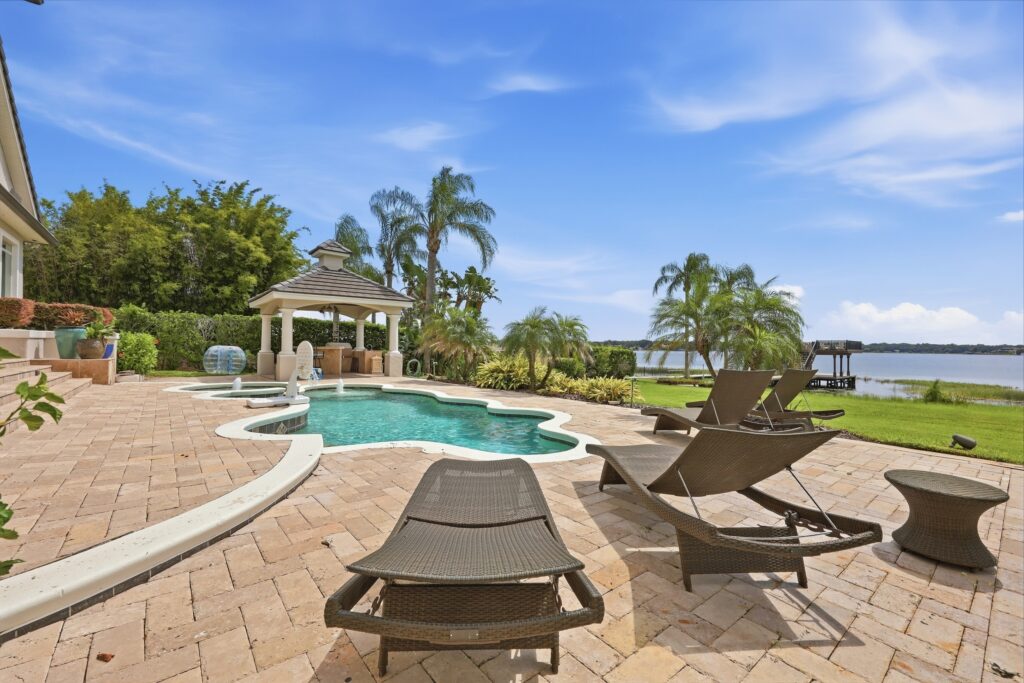
- Waterfront estates: Homes with lakefront, oceanfront, or other premium water access, often featuring private docks, expansive views, and resort-style amenities.
- Gated luxury communities: Exclusive residential neighborhoods with controlled access, community amenities, and distinctive homes.
- Custom-built homes: Architecturally unique properties featuring high-end finishes, specialized layouts, and personalized design.
- Luxury condominiums and penthouses: High-end urban or resort residences with premium services, views, and amenities.
- Luxury investment properties: High-value residential properties purchased for rental income, appreciation, or portfolio diversification.
- Historic and architecturally significant homes: Properties valued for their design, history, craftsmanship, or location.
What luxury clients expect from their real estate agent
Luxury buyers and sellers often have expectations that extend beyond the standard transaction process. They may prioritize:
- Discretion: Confidentiality and thoughtful handling of personal and financial information.
- Personalized service: Recommendations, communication, and property searches tailored to individual goals.
- Strong market knowledge: Detailed understanding of local neighborhoods, comparable sales, property features, and pricing trends.
- Sophisticated marketing: Professional visuals, targeted exposure, compelling property storytelling, and polished presentations.
- Negotiation expertise: The ability to navigate complex offers, unique property considerations, and significant financial decisions.
- Reliable communication: Proactive updates, careful attention to detail, and the ability to coordinate multiple professionals.
Ultimately, a luxury real estate agent isn’t simply selling an expensive home. They’re helping clients make significant decisions while providing the expertise, service, and confidence needed throughout the process.
How to Become a Luxury Real Estate Agent: 7 Steps to Get Started
Breaking into luxury real estate doesn’t happen overnight. The most effective approach is to build a strong foundation, develop specialized expertise, and establish a reputation that attracts the right clients.
Here are seven steps to help you get started.
1. Get Your Real Estate License and Build a Strong Foundation
Before you can specialize in luxury properties, you need to understand the fundamentals of real estate.
Start by meeting your state’s licensing requirements, completing the required education, passing the licensing examination, and fulfilling any applicable post-licensing requirements.
Once you’re licensed, focus on developing the practical skills that support successful transactions:
- Contract knowledge: Understand purchase agreements, disclosures, contingencies, and the documentation involved in residential transactions.
- Pricing and valuation: Learn how to evaluate comparable sales, interpret market data, and develop pricing recommendations.
- Negotiation: Practice structuring offers, resolving objections, and navigating different client priorities.
- Client communication: Develop the ability to explain complex information clearly, manage expectations, and maintain consistent follow-up.
- Transaction management: Learn how to coordinate inspections, appraisals, financing, title work, and closing timelines.
If you’re new to real estate, your first transactions are opportunities to build experience that will carry over into the luxury market. Working with first-time buyers, move-up buyers, sellers, or investors can help you strengthen your negotiation and communication skills while learning how to manage the entire transaction process.
If you’re already an established agent, evaluate your current business. Identify which skills translate well to luxury clients and which areas require additional development.
The goal isn’t to abandon your existing experience. It’s to build on it.
2. Learn Your Local Luxury Real Estate Market
Luxury real estate is highly localized. Understanding national trends is useful, but knowing your target neighborhoods in detail is what helps you provide meaningful advice.
Start by choosing one or two areas to focus on. Research:
- Luxury price ranges: Identify what qualifies as a luxury property in your local market.
- Recent sales: Track sale prices, price per square foot, days on market, and list-to-sale price differences.
- Active inventory: Monitor current listings, new construction, price reductions, and competing properties.
- Market trends: Follow inventory, buyer demand, interest rates, and luxury sales activity.
- Neighborhood characteristics: Learn about amenities, architecture, lot sizes, privacy, accessibility, and nearby attractions.
- Buyer preferences: Understand which features drive demand, from waterfront access and outdoor living to smart-home technology and security.
For example, an agent entering the Orlando luxury market might focus on Windermere, Dr. Phillips, Lake Nona, or Winter Park. Each area offers different property styles, lifestyle benefits, and buyer priorities. A buyer seeking a waterfront estate on the Butler Chain of Lakes may have very different needs from someone looking for a modern home near Lake Nona’s business and medical corridor.
Learn what makes each neighborhood distinct so you can speak confidently about its inventory, pricing, and lifestyle.
Practical tip: Create a weekly luxury market report for your target area. Track new listings, pending sales, closed transactions, price changes, and standout property features. Consistent research will help you build the expertise needed to guide luxury buyers and sellers.
3. Choose the Right Luxury Real Estate Training and Certification
Specialized education can help you develop the skills needed to work with luxury buyers and sellers. It can also demonstrate your commitment to professional development as you build credibility in a competitive market.
Several programs offer luxury-focused education, but they differ in structure, requirements, and recognition.
Certified Luxury Home Marketing Specialist (CLHMS)
The Institute for Luxury Home Marketing offers the Certified Luxury Home Marketing Specialist (CLHMS) designation for agents seeking specialized luxury real estate knowledge and professional recognition.
Its training focuses on understanding the luxury market, marketing high-end properties, and developing the expertise needed to serve affluent buyers and sellers.
The Institute also provides membership resources, including:
- Monthly luxury market reports covering active markets across the United States and Canada.
- Professional networking through its luxury real estate community.
- Marketing resources and automated social media content through ACE Social.
- Continuing education opportunities.
- Additional professional recognition through its GUILD and GUILD ELITE programs for qualifying agents.
One important distinction is that the CLHMS designation has production requirements. Completing luxury-focused training and earning the designation are not necessarily the same thing. Agents should review the current eligibility criteria to understand what is required.
Luxury Homes Certification (LHC)
The Residential Real Estate Council offers the Luxury Homes Certification (LHC) for REALTORS® who want to strengthen their knowledge of the luxury property market.
The program focuses on practical skills, including:
- Luxury market research.
- Pricing and valuation strategies.
- Advanced negotiation tactics.
- Luxury home presentations.
- Strategies for entering the high-end market.
- Understanding how luxury transactions differ from other residential sales.
The LHC is an educational certification designed to help agents build specialized skills. It does not have the same production-based designation structure as CLHMS.
Which luxury real estate certification should you choose?
The right program depends on your goals, experience, budget, and preferred learning format.
| Program | Primary focus | Key distinction |
| CLHMS | Luxury market education, marketing, and professional recognition | Designation with documented production requirements |
| LHC | Luxury pricing, negotiation, research, and property presentation | Skills-focused educational certification |
Neither credential guarantees luxury listings, higher income, or a successful career. The value comes from applying what you learn to your business.
If you’re new to luxury real estate, a practical training program can help you identify skill gaps and develop a plan. If you already have relevant experience and production, a designation may provide an additional way to communicate your qualifications.
Before enrolling, compare course content, eligibility requirements, costs, renewal policies, and the resources included with membership.
4. Build Credibility Before You Have Luxury Listings
To attract luxury clients, you need to show that you can market high-end properties, manage complex transactions, and communicate a home’s value effectively. Even without luxury sales experience, you can build credibility in several ways.
Partner with experienced luxury real estate agents.
Look for opportunities to work alongside established agents. You might assist with showings, research, marketing, or transaction coordination. Co-listing or joining a team can also expose you to luxury transactions and help you learn how experienced agents manage client expectations and negotiations.
Build a portfolio that showcases your skills.
Your portfolio doesn’t need to feature multimillion-dollar sales. Highlight examples that demonstrate your expertise, such as:
- Successful listing campaigns.
- Neighborhood market analyses.
- Property marketing packages.
- Client testimonials.
- Case studies showing how you positioned a home in a competitive market.
Be transparent about your role in each example.
Create educational content that demonstrates local expertise.
A strong online presence helps potential clients discover your knowledge. Create neighborhood guides, market updates, short-form videos, and blog posts that answer questions about buying, selling, pricing, and marketing luxury properties.
Become a resource, not just a salesperson.
Consistently sharing useful information and offering thoughtful guidance helps establish trust. When potential clients recognize you as a knowledgeable professional who understands their market, you’re building a foundation for future relationships and luxury listings.
5. Develop a Luxury Real Estate Marketing Strategy
Marketing luxury real estate requires more than posting beautiful property photos. High-end homes often have distinctive features, architectural details, and lifestyle advantages that need to be communicated through a deliberate marketing strategy.
Your goal is to help potential buyers understand not only what a property looks like, but also what makes it valuable and how it fits their lifestyle.
Invest in high-quality visual storytelling
Professional visuals are essential when presenting luxury properties.
Consider incorporating:
- Professional photography: Capture architecture, interior design, natural light, materials, and important property details.
- Cinematic video tours: Create engaging walkthroughs that communicate the home’s layout, atmosphere, and lifestyle.
- Drone photography and video: Showcase the property, surrounding landscape, waterfront access, and neighborhood context where permitted.
- 3D tours and floor plans: Help buyers understand the layout and evaluate whether a property meets their needs.
- Lifestyle photography: Highlight features such as outdoor entertaining, private amenities, scenic views, or proximity to local attractions.
The key is to match the marketing approach to the property. A modern lakefront estate may call for a different visual style than a historic home or a contemporary penthouse.
Create a distinctive personal brand
Your personal brand should communicate the kind of experience clients can expect when working with you.
Consider the following:
- What type of luxury properties do you understand best?
- Which neighborhoods do you want to serve?
- What makes your approach to buying or selling different?
- What type of service experience do you want clients to associate with your name?
Develop a consistent visual identity, professional website, clear messaging, and an online presence that reflects your expertise.
You don’t need to imitate the lifestyle portrayed in luxury advertising. Authentic expertise, strong communication, and a distinctive point of view are more valuable than trying to look wealthy.
Use SEO and content marketing to attract clients
Search engine optimization can help you reach people actively researching luxury homes and neighborhoods.
Create useful, locally focused content around topics such as:
- Luxury homes for sale in your target area.
- Neighborhood guides and community comparisons.
- Local luxury market updates.
- Buying waterfront or custom-built homes.
- Preparing a luxury property for sale.
- Understanding the costs and considerations of owning a high-end home.
Use descriptive page titles, relevant keywords, clear headings, and internal links to make your content easier to discover and navigate.
Social media can reinforce that visibility. Instagram, YouTube, LinkedIn, and other relevant platforms allow you to share market insights, property tours, educational content, and professional perspectives.
Instead of relying exclusively on listing promotions, develop a content strategy that helps people understand your market and your approach.
Make each listing experience feel intentional
Luxury marketing should be tailored to the property and its likely buyers.
Consider developing a marketing plan for each listing that includes:
- A property-specific positioning strategy.
- Professional visuals and compelling listing copy.
- A dedicated property webpage when appropriate.
- Targeted digital and email campaigns.
- Agent-to-agent outreach.
- Private showings or curated open houses.
- Follow-up procedures for interested buyers and their representatives.
The objective is to communicate the property’s value clearly and reach relevant buyers through appropriate channels.
6. Build Relationships in the Luxury Market
Luxury real estate is a relationship-driven business. Referrals, professional connections, and long-term trust can create valuable opportunities for a luxury real estate agent.
Rather than focusing on exclusive events or meeting wealthy people, build genuine relationships with professionals who serve your target market.
Connect with complementary professionals.
Build relationships with mortgage professionals, attorneys, financial advisors, custom home builders, architects, interior designers, relocation specialists, and experienced luxury real estate agents. Share useful insights, offer support, and look for ways to help each other’s clients.
Get involved in your target communities.
Attend local events, charitable fundraisers, industry gatherings, and community activities that align with your interests. Focus on becoming a familiar, trusted presence instead of treating every interaction as a sales opportunity.
Expand your referral network.
Luxury buyers often relocate from other cities or states. Connect with agents in markets that may send buyers to your area. For example, an Orlando luxury real estate agent could build relationships with agents in New York, Chicago, or California to connect with people considering a move to Central Florida.
Stay in touch.
Networking takes consistent follow-up. Share relevant market updates, check in with professional contacts, offer helpful resources, and make introductions when appropriate.
Strong relationships develop over time. Prioritize meaningful connections and consistent communication over constantly chasing new leads.
7. Develop the Mindset and Service Standards of a Luxury Real Estate Agent

Luxury clients may be making significant financial decisions, managing complex schedules, or balancing personal and professional priorities. Your ability to deliver a dependable experience is just as important as your knowledge of the property.
Several habits can help you meet those expectations.
Communicate proactively.
Don’t wait for clients to ask for updates. Establish clear expectations, provide timely information, and communicate potential challenges before they become larger problems.
Protect privacy and confidentiality.
Handle personal, financial, and property information carefully. Understand your legal and professional obligations and use appropriate procedures for private showings, sensitive negotiations, and confidential client requests.
Anticipate client needs.
Think beyond the immediate transaction. A buyer relocating from another state may need recommendations for local services, schools, or community resources. A seller preparing a large estate may need help coordinating vendors, staging, and property access.
You don’t have to personally handle every detail. Knowing how to connect clients with the right professionals can make the process more manageable.
Be patient and adaptable.
Some luxury transactions involve unique property features, complex financing, privacy concerns, or buyers who are evaluating multiple markets. Sales timelines can vary significantly.
Focus on providing consistent guidance instead of measuring success only by how quickly a transaction closes.
Maintain high professional standards.
Luxury service doesn’t mean excessive formality or making assumptions about a client’s lifestyle. It means listening carefully, respecting preferences, following through on commitments, and providing thoughtful recommendations.
Ultimately, exceptional service is defined by the client’s needs, not by the price of the home.
How to Get Your First Luxury Real Estate Listing
Your first luxury listing can be an important milestone, but it doesn’t have to come from a wealthy stranger or a major marketing campaign.
A more practical approach is to focus on a specific neighborhood, build visibility, and create opportunities to demonstrate what you can offer.
1. Start with your existing network
Review your current sphere of influence. Consider past clients, professional contacts, friends, family, and local business relationships.
You may already know homeowners who own higher-value properties or professionals who work with luxury buyers and sellers.
Avoid making assumptions about someone’s finances or plans. Instead, communicate your evolving expertise and let people know the types of properties and neighborhoods you are focusing on.
For example, you might share a market update about a neighborhood you’ve been researching or invite your network to explore a new local property guide.
The goal is to make your expertise visible without turning every relationship into a sales pitch.
2. Choose a specific neighborhood to target
Select one luxury neighborhood or micro-market where you can develop meaningful expertise.
Research the community’s:
- Recent closed sales.
- Current and upcoming inventory.
- Typical property features.
- Price ranges.
- Buyer demographics and lifestyle considerations, using appropriate and reliable market data.
- Community amenities and location advantages.
- Common seller questions and challenges.
Build a detailed neighborhood profile and update it regularly.
When you can explain why two similar homes in the same community have different market values, you’re developing the kind of knowledge that can distinguish your service.
3. Create a hyperlocal marketing plan
Once you’ve selected your target area, build a content strategy focused specifically on that community.
Possible content includes:
- A complete neighborhood guide.
- A monthly market update.
- A video tour of notable properties.
- A comparison of different home styles or sections of the community.
- An explanation of local amenities and lifestyle benefits.
- A guide to preparing a home for sale in that neighborhood.
Distribute the content through your website, social media, email newsletter, and other appropriate channels.
Over time, this creates a useful library of information that can attract buyers and sellers researching the area.
4. Offer a detailed property valuation
A thoughtful comparative market analysis can be a useful way to begin conversations with potential sellers.
For a luxury property, avoid relying on a basic price-per-square-foot calculation alone. Consider:
- Location within the neighborhood.
- Lot size and privacy.
- Architectural style and condition.
- Renovations and upgrades.
- Unique amenities.
- Recent comparable sales.
- Current competition.
- Market conditions and buyer demand.
Explain your methodology and identify where comparable data is limited.
Luxury properties can be highly individual, so it’s important to communicate uncertainty rather than presenting a valuation as a guaranteed sale price.
5. Show sellers how you would market their property
Before a seller hires you, they need to understand what you would do differently or how you would approach the sale.
Prepare a sample marketing presentation that includes:
- Your proposed property positioning.
- A visual direction for photography and video.
- A sample listing description.
- An example of a dedicated property webpage or digital brochure.
- A distribution plan for digital and agent-to-agent outreach.
- A proposed communication and reporting process.
Make the presentation specific to the property and the seller’s goals.
This gives prospective clients a tangible way to evaluate your strategy, even if you haven’t handled many luxury listings yet.
6. Partner with an experienced luxury real estate agent
If you don’t yet have the experience to confidently manage a complex luxury listing on your own, look for a mentor or team opportunity.
An experienced agent can help you understand seller consultations, pricing decisions, marketing coordination, negotiations, and transaction management.
Be clear about responsibilities, compensation, licensing requirements, and client communication before entering a partnership.
A successful collaboration can help you develop experience while providing the seller with a team that has complementary strengths.
7. Turn your first luxury listing into future opportunities
Your first luxury transaction is also an opportunity to build long-term credibility.
Deliver the service you promised, document the marketing process, communicate consistently, and gather feedback from the client.
With the client’s permission, develop a case study that explains the property’s marketing strategy and the results achieved. Be accurate about your role and avoid implying that one transaction guarantees the same outcome for future sellers.
You can then use that experience to strengthen your portfolio, improve your marketing presentations, and demonstrate your growing expertise to prospective clients.
The objective isn’t simply to secure one expensive listing. It’s to build a repeatable approach to serving luxury buyers and sellers.
How Much Do Luxury Real Estate Agents Make?
Luxury real estate agents can earn substantial commissions from high-value transactions, but income varies widely depending on sales volume, commission agreements, brokerage arrangements, expenses, and market conditions.
There is no guaranteed salary or standard commission rate for luxury real estate agents.
Example of a luxury real estate commission
Consider a hypothetical luxury home sale with the following details:
| Detail | Amount |
| Home sale price | $2,000,000 |
| Negotiated commission for the agent’s side | 2.5% |
| Gross commission | $50,000 |
In this example, a 2.5% commission on a $2 million transaction would generate $50,000 in gross commission income for the agent’s side of the transaction.
However, that amount isn’t necessarily what the agent takes home.
The agent may have to account for:
- Brokerage commission splits.
- Referral fees.
- Marketing and transaction expenses.
- Professional photography and video.
- Licensing, association, and technology fees.
- Taxes and other business costs.
For instance, if the agent’s brokerage split were 70/30, the agent would retain $35,000 before additional expenses and taxes, assuming no other deductions or referral arrangements.
Actual compensation is negotiable and varies by transaction. The example is illustrative, not a standard industry rate or an earnings prediction.
What affects luxury real estate income?
Several factors influence how much a luxury real estate agent earns.
Transaction volume: An agent completing multiple luxury transactions may generate more gross commission income than an agent who closes only one or two high-value deals.
Local market conditions: Inventory, buyer demand, interest rates, and economic conditions can influence transaction volume and sales timelines.
Property specialization: Agents who understand a specific niche, such as waterfront estates, new construction, or luxury condominiums, may develop different business opportunities.
Client relationships and referrals: Repeat business and referrals can reduce the need to constantly generate new leads, although building those relationships takes time.
Business expenses: High-end marketing, professional services, and client acquisition can involve significant costs.
Luxury properties often have higher sale prices, but that doesn’t automatically translate into consistent income or higher profitability. Agents should evaluate their business based on net income, expenses, and the sustainability of their client pipeline rather than headline commission amounts alone.
Common Mistakes to Avoid When Breaking Into Luxury Real Estate
Entering the luxury market requires a different approach than simply increasing your average sales price. Some common mistakes can make it harder to build credibility, attract clients, and create a sustainable business.
Here are seven things to avoid.
1. Focusing on Expensive Homes Instead of Client Needs
Luxury real estate is about more than price. A high-value property may have unique architectural features, complex ownership considerations, or lifestyle benefits that require specialized knowledge.
Instead of focusing exclusively on the home’s price, learn what matters to the buyer or seller. Understand their priorities, ask thoughtful questions, and tailor your recommendations accordingly.
2. Investing Too Much in Branding Too Soon
A polished website, professional headshots, and high-end marketing materials can support your business, but they won’t replace experience or market knowledge.
Before investing heavily in branding, establish your target market, refine your value proposition, and identify the services you can consistently deliver.
Your brand should reflect your expertise, not attempt to create the appearance of expertise you haven’t yet developed.
3. Ignoring Local Market Knowledge
Understanding national luxury trends is useful, but luxury real estate decisions are often driven by highly specific local factors.
A waterfront property, for example, may have different valuation considerations depending on water access, views, flood exposure, dock infrastructure, and location.
Learn the details that influence value in your target market. Local expertise is one of the most practical ways to differentiate yourself.
4. Using Generic Property Marketing
Luxury buyers are often comparing properties with distinctive features and different lifestyle advantages. Generic listing descriptions and repetitive marketing campaigns can make those differences difficult to recognize.
Develop a property-specific strategy that highlights what makes each home unique. Consider architecture, design, location, amenities, and the lifestyle the property supports.
The goal is to tell a compelling and accurate story about the home rather than simply describing its specifications.
5. Treating Networking Like a Numbers Game
Attending events and collecting contacts won’t automatically lead to luxury listings.
Strong professional relationships develop through trust, shared value, and consistent communication. Focus on building a smaller network of meaningful connections instead of measuring success by how many people you meet.
Look for opportunities to help others, make useful introductions, and stay connected over time.
6. Overpromising Results or Exaggerating Experience
Luxury clients deserve honest advice, realistic expectations, and accurate information.
Avoid guaranteeing a sale price, promising a specific timeline without supporting evidence, or presenting yourself as an experienced luxury specialist if you are still developing those skills.
Be transparent about your experience and explain how your approach, professional relationships, and marketing strategy can support the client’s goals.
Trust is difficult to build and easy to damage. Your reputation will benefit more from honest communication than from exaggerated claims.
7. Neglecting Follow-Up and Long-Term Relationships
Not every prospective luxury client is ready to buy or sell immediately. Some may spend months researching neighborhoods, evaluating properties, or considering a move.
A consistent follow-up process helps you stay connected without being overly persistent.
Share relevant market updates, answer questions, and offer useful information when appropriate. Even if a prospect doesn’t become a client right away, a positive experience can create future opportunities.
Is Luxury Real Estate the Right Career Path for You?
Luxury real estate can offer opportunities to work with distinctive properties, develop specialized expertise, and build long-term professional relationships. However, it also comes with challenges that are important to understand before making the transition.
Consider whether your strengths and professional goals align with the demands of this market.
You may enjoy luxury real estate if you:
- Have a genuine interest in architecture, design, high-end homes, and local communities.
- Enjoy researching market trends and understanding the details that influence property value.
- Are comfortable working with clients who have complex needs and high expectations.
- Communicate clearly and confidently, including during challenging negotiations.
- Value relationship building and are willing to invest time in long-term connections.
- Enjoy developing thoughtful marketing strategies and presenting properties creatively.
- Are motivated to keep learning and adapt to changing market conditions.
At the same time, consider the challenges.
Luxury transactions may involve longer sales cycles, more complex property considerations, and significant competition. Marketing expenses can be substantial, and a higher average sale price doesn’t guarantee a steady pipeline of clients.
Building a reputation in the luxury market can take time. You may need to continue working with clients across different price ranges while developing your specialized business.
The decision comes down to whether you’re interested in the work involved, not just the properties or potential commissions.
A successful transition requires patience, preparation, and a clear understanding of what you can offer clients.
Your Next Steps to Enter the Luxury Real Estate Market
Breaking into luxury real estate can feel like a large undertaking, but you don’t have to accomplish everything at once.
Start with a focused plan that helps you build knowledge, identify opportunities, and take consistent action.
Here’s a practical 30-day plan to get moving.
Your 30-day luxury real estate action plan
Week 1
Choose your target luxury market. Select one neighborhood or property niche to focus on. Research recent sales, current inventory, pricing trends, and the features that influence property values.Your goal: Create a simple luxury market report with recent listings, pending sales, closed transactions, and key observations.
Week 2
Identify your training and experience gaps. Review luxury real estate training options, including CLHMS and LHC. Compare course requirements and identify the skills you want to strengthen.Assess your current experience in pricing, negotiation, property marketing, and luxury client service.Your goal: Choose a learning path and identify at least three specific skills to develop.
Week 3
Build your local marketing presence. Create a content and outreach plan focused on your chosen neighborhood. Draft a neighborhood guide, plan a short market update, or prepare a sample luxury listing presentation.Your goal: Publish or prepare one useful piece of content that demonstrates your local expertise.
Week 4
Start building professional relationships. Identify experienced luxury real estate agents, local real estate professionals, and potential referral partners. Reach out with a genuine introduction and look for opportunities to learn, collaborate, or provide value.Your goal: Establish several meaningful professional connections and identify at least one opportunity to gain additional luxury market experience.
At the end of the month, review your progress. What did you learn about your target market? Which skills need more attention? Did you discover a potential mentor, collaboration, or new business opportunity?
Use those answers to guide your next 30 days.
The process of becoming a luxury real estate agent isn’t defined by one certification, one listing, or one successful transaction. It’s built through consistent effort, specialized knowledge, meaningful relationships, and a reputation for delivering excellent service.
If you’re ready to take the next step, explore luxury real estate agent training programs, connect with an experienced agent in your market, and start developing a focused plan for the clients and properties you want to serve.
The luxury market is a specialization you build over time. Start by becoming the kind of agent a luxury client can confidently trust.
📲 Call or text 407-797-2931
📧 Email tiphany@dregorlando.com
🌐 Visit www.dregorlando.com to start your home-selling journey.
Meet Tiphany
Orlando Real Estate Pro
Buying a home is one of the most important purchases one can make, but it doesn’t need to be complicated. I’m Tiphany Weeks, the founder and broker of record for Diamond Real Estate Group. While traveling the world as a baseball wife we moved around a lot; and it wasn’t always easy. I realized the search to find a realtor that knows exactly what you need can be a very daunting task, so I decided it was time to create a new solution for helping people find their way home.
- Orlando Home Prices 2026: What Buyers Need to Know Right Now
 Key Takeaways: Orlando home prices are in a more balanced market in 2026, giving buyers more choices and potentially more negotiating power. Before making an offer, compare recent sales in your target neighborhood, calculate the full monthly cost including taxes, insurance, and HOA fees, and look at days on market and price reductions to understand… Read more: Orlando Home Prices 2026: What Buyers Need to Know Right Now
- Royal Cypress Preserve: Complete Guide to Living, Homes & Prices
 Key Takeaways: Royal Cypress Preserve offers luxury single-family homes, guard-gated living, resort-style amenities, lake access, and a prime Dr. Phillips location near Disney, dining, and major roads. If you’re buying, compare recently sold homes, HOA costs, lot location, renovations, and major systems before making an offer. Thinking about living in Royal Cypress Preserve? If you’re… Read more: Royal Cypress Preserve: Complete Guide to Living, Homes & Prices
- Can You Sell a House with a Mortgage? Here’s Why You Still Can
 One of the most common questions homeowners ask is: Can you sell a house with a mortgage? The short answer is yes. Many homeowners assume having an active mortgage means they must fully pay off their loan before selling. In reality, selling a house with a mortgage is common and happens daily across Orlando and… Read more: Can You Sell a House with a Mortgage? Here’s Why You Still Can
- How to Sell Your Home Fast in Orlando, FL
 It takes more than luck to sell your home fast in Orlando, FL It’s about how you set it up from the start. The homes that sit usually miss one or two key things.The ones that move fast get those right early. If you’re trying to figure out how to sell your home fast in… Read more: How to Sell Your Home Fast in Orlando, FL
- Golden Oak Homes in Disney: 7 Reasons They’re Worth It
 If you’ve ever dreamed of living inside Walt Disney World Resort, Golden Oak Homes in Disney make that dream a reality. But this isn’t just about proximity to the parks. It’s about a lifestyle that blends luxury, convenience, and a little bit of magic. So… are Golden Oak homes right for you? Here are 7… Read more: Golden Oak Homes in Disney: 7 Reasons They’re Worth It

Leave your thoughts: